

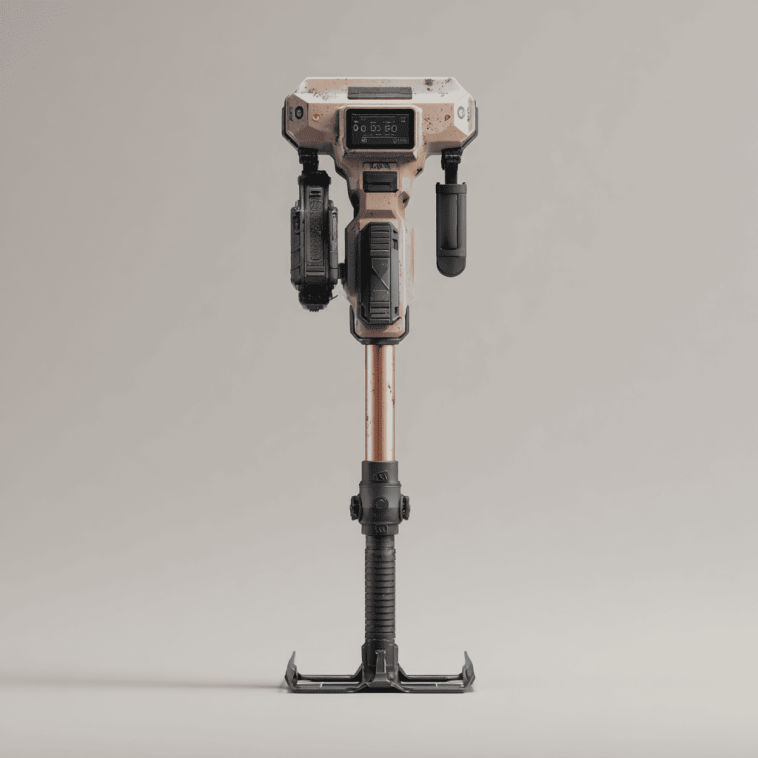
For centuries, archaeologists have faced a fundamental challenge: how to uncover the secrets of the past without destroying the very evidence they seek. Traditional excavation, while invaluable, is inherently destructive—a one-time event that forever alters a site. But a new era of discovery has dawned, one where technology allows us to see beneath the surface before ever breaking ground. At the forefront of this revolution stands OKM metal detectors, a German company whose advanced 3D ground scanners and ground-penetrating radar systems are transforming how we explore, document, and preserve our shared human heritage. These remarkable tools are empowering archaeologists to uncover hidden histories with unprecedented precision, all while protecting the fragile sites that hold our past.
The Challenge: Invisible History Beneath Our Feet

This is where OKM’s technology makes an extraordinary difference. By providing archaeologists with the ability to “see” underground before excavating, these detectors transform exploration from guesswork into precise, data-driven science.
The Technology: 3D Ground Scanners And Ground-Penetrating Radar
OKM, headquartered in Altenburg, Germany, has spent more than 25 years developing and manufacturing innovative geophysical measurement systems. Their product line includes sophisticated 3D ground scanners, ground-penetrating radar (GPR) systems, and specialized metal detectors, all designed to detect subsurface anomalies and visualize buried structures.
How It Works
The core technology behind OKM’s archaeological tools is 3D ground scanning. Unlike traditional metal detectors that simply beep when passing over metal, OKM’s scanners transmit signals into the ground and analyze the returning echoes to create detailed three-dimensional images of what lies beneath. Using specialized software called Visualizer 3D Studio, researchers can see color-coded representations of buried objects, complete with information about their position, size, and depth.
The technology includes several operating modes suited for archaeological work:
-
3D Ground Scan: Creates detailed three-dimensional images of underground structures, allowing archaeologists to visualize tombs, foundations, and cavities before digging
-
Magnetometer Mode: Detects ferromagnetic materials, helping identify areas with iron objects that may indicate human activity
-
Pinpointer Mode: Determines the type of material detected, distinguishing between ferrous metals, precious metals, and voids
Some models, like the Gepard GPR 3D, use ground-penetrating radar technology capable of reaching depths down to 40 meters (132 feet), while others in the Fusion series can detect structures up to 21 meters (69 feet) deep. This extraordinary depth capability opens up entirely new possibilities for archaeological investigation.
Real Discoveries: OKM In Action
The true power of OKM’s technology is best demonstrated through the remarkable discoveries made by archaeologists and researchers using their equipment around the world.
Knights Templar Church In Poland
In one of the most compelling examples, OKM partnered with historians and archaeologists exploring a 13th-century Templar church in Chwarszczany, Poland. Using the OKM Rover C4 3D ground scanner and the Gepard GPR 3D ground-penetrating radar, researchers made a stunning discovery.
The scans revealed significant anomalies between the church and a neighboring well at depths of approximately 3.7 to 6 meters. These anomalies strongly suggested the presence of an underground cavity—potentially a tunnel connecting the Templar headquarters to the water source. Additional scans inside the church confirmed the existence of a crypt or tomb beneath the sanctuary, sparking further excavations that uncovered medieval floor structures and vaulted corridors.
The discovery attracted international attention, including coverage by the Discovery Channel series “Expedition Unknown” with explorer Josh Gates, who featured the Templar treasure hunt in Season 10.
Colonial Gold Artifact In South America
Near an ancient bridle path in South America, a treasure hunter using the OKM Bionic X4 located a golden artifact depicting a miner known as “Chinchillico”—a revered figure from the region’s colonial mining history. The object, weighing 262 grams, was buried approximately 60 centimeters deep within a deteriorated ceramic container. The find provided a tangible connection to the colonial past, revealing how miners were once venerated for their labor and endurance.
Secret Chamber At Machu Picchu
Perhaps most dramatically, OKM technology played a role in one of archaeology’s most intriguing recent discoveries. Ground scans at the famous Inca citadel of Machu Picchu revealed a secret chamber beneath the site—suspected by researchers to be a royal mausoleum. Though exploration was halted before the mystery could be fully unraveled, the discovery demonstrates how modern detection technology can reveal entirely new chapters in the stories of even the most studied historical sites.
Preservation Through Precision
One of the most significant benefits of OKM’s technology is its non-invasive nature. Traditional archaeology often requires large-scale excavation that permanently alters a site. With 3D ground scanning, researchers can:
-
Identify promising areas for excavation with confidence, reducing unnecessary digging
-
Create detailed records of underground features before any soil is moved
-
Protect sensitive or protected areas where traditional excavation is limited or forbidden
-
Preserve the integrity of sites for future researchers who may have even better technology
This approach aligns perfectly with modern archaeological ethics, which prioritize preservation and documentation over extraction. As OKM notes, their detectors help archaeologists “conduct surveys that preserve the integrity of historic sites while maximizing the potential for discovery”.
The Future Of Archaeological Exploration
The success of OKM’s technology in the field points toward an exciting future for archaeology. As these tools become more sophisticated and more widely available, we can expect:
-
More discoveries in previously explored areas: Sites thought to be fully understood may reveal new secrets when viewed with advanced scanning technology
-
Preservation of at-risk sites: Rapid, non-invasive surveys can document endangered locations before they are lost to development or natural erosion
-
Citizen science opportunities: Accessible technology allows responsible amateur researchers to contribute meaningful data to professional archaeologists
-
Global collaboration: Digital scan data can be shared across continents, allowing experts worldwide to analyze findings without traveling to the site
A New Window Into The Past
OKM metal detectors and 3D ground scanners represent a genuine revolution in archaeological exploration. By allowing researchers to see beneath the surface before ever breaking ground, these German-engineered tools are transforming how we discover, document, and preserve our shared human heritage. From Templar tunnels in Poland to secret chambers at Machu Picchu, the technology is already rewriting history books.
For archaeologists, historians, and responsible explorers, OKM provides something invaluable: the ability to ask new questions of old ground and receive answers without destroying the evidence. Every discovery made with these tools is a story rescued from the soil—a piece of our collective past brought back into the light. As the technology continues to evolve, one thing is certain: the greatest archaeological discoveries of the future may well be made by those who learn to see before they dig.


